Direct answer
EN 71 and LHAMA are not interchangeable universal certificates. EN 71 refers to European toy-safety standards with multiple parts, while LHAMA concerns U.S. art-material toxicological review and chronic-hazard labeling. Buyers must confirm product classification, destination market, applicable scope, final materials, intended age, and whether the customized SKU matches the reviewed sample.
Key takeaways
- Ask for the full report or review document, not only a logo or certificate image.
- Match product name, sample description, colors/materials, applicant, date, methods, and results.
- Customization can change compliance relevance.
- Destination-market obligations and product classification must be confirmed separately.
Zibom EN 71 and LHAMA safety documents
The two documents below are the safety-related files referenced by this guide. Design patents and packaging patents are separate intellectual-property documents and are intentionally excluded from this section.
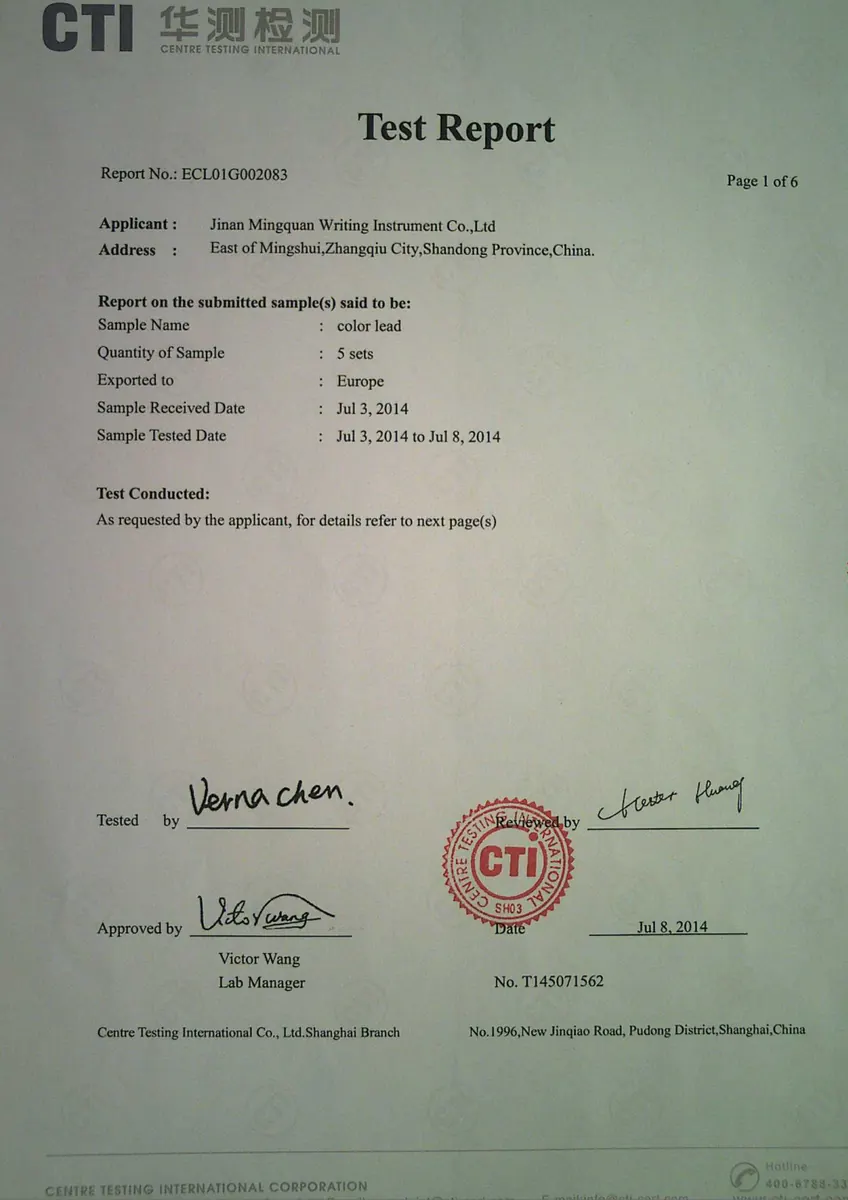
EN 71 Toy Safety Test Report
Safety test documentation for the product sample and test scope identified in the report.
Open EN 71 Report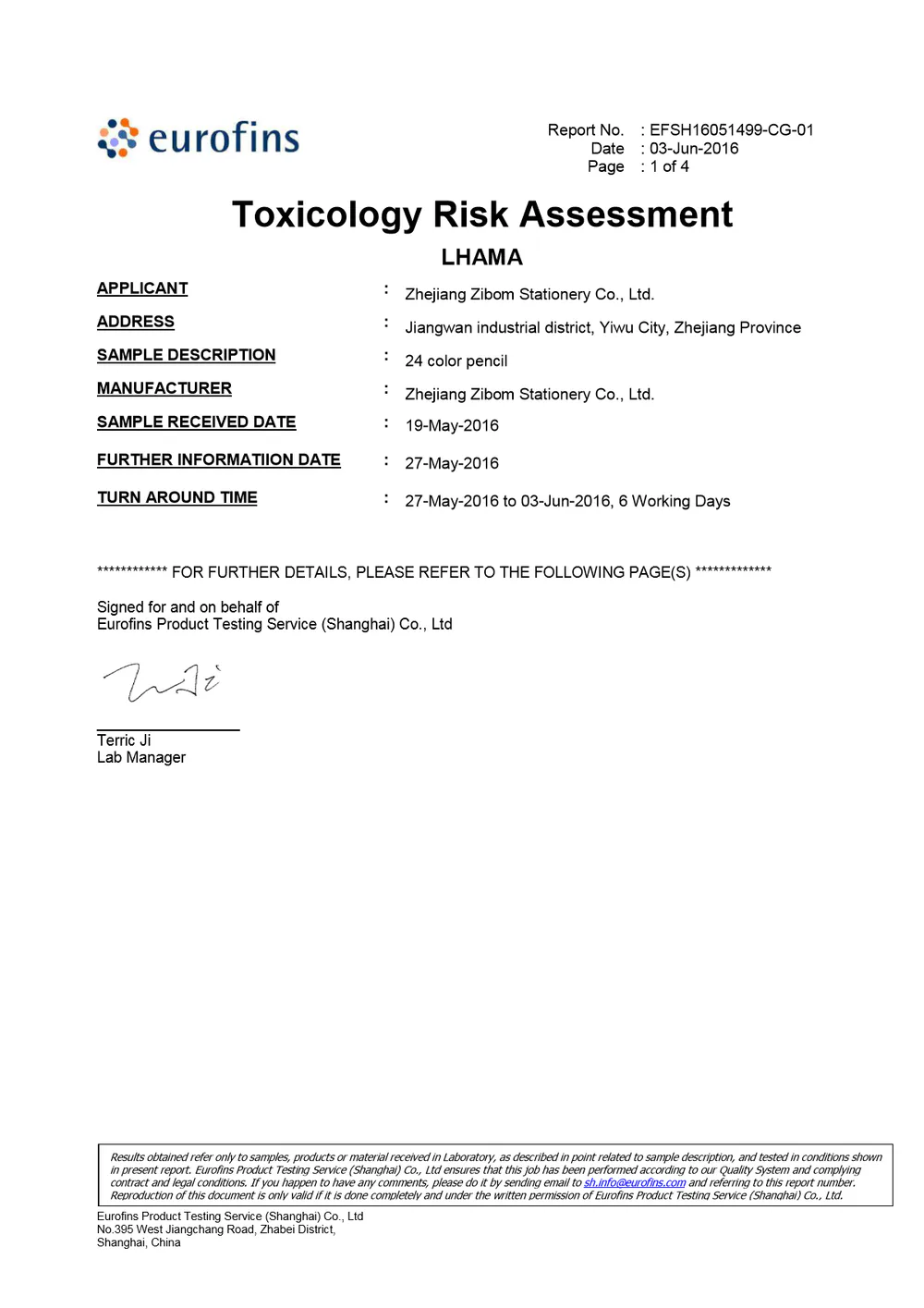
LHAMA Art Materials Safety Certification
Toxicological assessment documentation for the art-material sample identified in the file.
Open LHAMA DocumentWhat is EN 71?
EN 71 is a family of European standards used in toy-safety assessment. Different parts address different hazards and test methods. A buyer should not request “EN 71” as an undefined label; the applicable parts depend on product classification, materials, intended user, and market requirements.
For pencils marketed to children, the central question is whether the final product is classified within the relevant toy or children's-product framework and which chemical, physical, labeling, or other requirements apply. Obtain qualified compliance advice for the destination market.
What is LHAMA?
LHAMA—the U.S. Labeling of Hazardous Art Materials Act—relates to art materials and chronic-hazard review and labeling. Its relevance depends on whether the item is an art material and how it is intended and marketed. A colored pencil set sold for artistic use may raise different review questions from a general writing pencil.
EN 71 and LHAMA compared
| Question | EN 71 | LHAMA |
|---|---|---|
| Primary context | European toy-safety standards | U.S. art-material chronic-hazard review and labeling |
| Single universal test? | No; it contains multiple parts | No; relevance depends on product and toxicological review |
| Buyer must define | Product classification, applicable parts, market, age and materials | Art-material status, intended use, review and labeling requirements |
| Does one report cover all SKUs? | No, not automatically | No, not automatically |
How to review a supplier document
- Identify the laboratory or reviewing body and document number.
- Confirm applicant and manufacturer information where shown.
- Read the product and sample description, not only the cover page.
- Check which materials, components, coatings, cores, and colors were represented.
- Confirm standards, parts, methods, age or use assumptions, and result.
- Check issue date and whether the product has changed since testing.
- Compare the tested sample with your final customized specification.
- Confirm destination-market and importer obligations with qualified advisers.
When customization may require a new assessment
Changes to lacquer, printing ink, foil, color core, eraser, ferrule coating, adhesive, wood treatment, packaging claims, age grading, color assortment, or supplier can affect the relevance of existing documentation. Even when the base construction is unchanged, the buyer should document why the existing report is applicable or arrange additional testing.
Compliance questions to include in an RFQ
- What is the destination country or region?
- How will the product be described and marketed?
- What is the intended age group and user?
- Is it a writing product, art material, toy, school supply, or another category?
- Which exact materials, colors, components, and packaging will be used?
- Which standards, regulations, retailer protocols, or reports are required?
- Who pays for project-specific testing, and how does it affect timing?
- Which party owns and receives the final report?
Avoid these unsupported claims
Do not automatically describe a product as “certified,” “non-toxic,” “child safe,” “food grade,” or compliant in every market unless the exact claim is supported for the final product and permitted under the applicable rules. Safer procurement language is specific: identify the report, tested sample, test scope, result, and conditions.
Frequently asked questions
Does one EN 71 report cover every pencil?
No. Relevance depends on the sample, materials, colors, applicable parts, report scope, and final product match.
Is LHAMA the same as EN 71?
No. They arise in different legal and product contexts. One should not be presented as a substitute for the other.
Should customized products be retested?
Possibly. Changes in materials, components, claims, intended ages, or destination markets may require a new review or testing. Confirm with a qualified laboratory or compliance adviser.